 Textiles Weihuang | Usine de sacs Eco RPET personnalisés
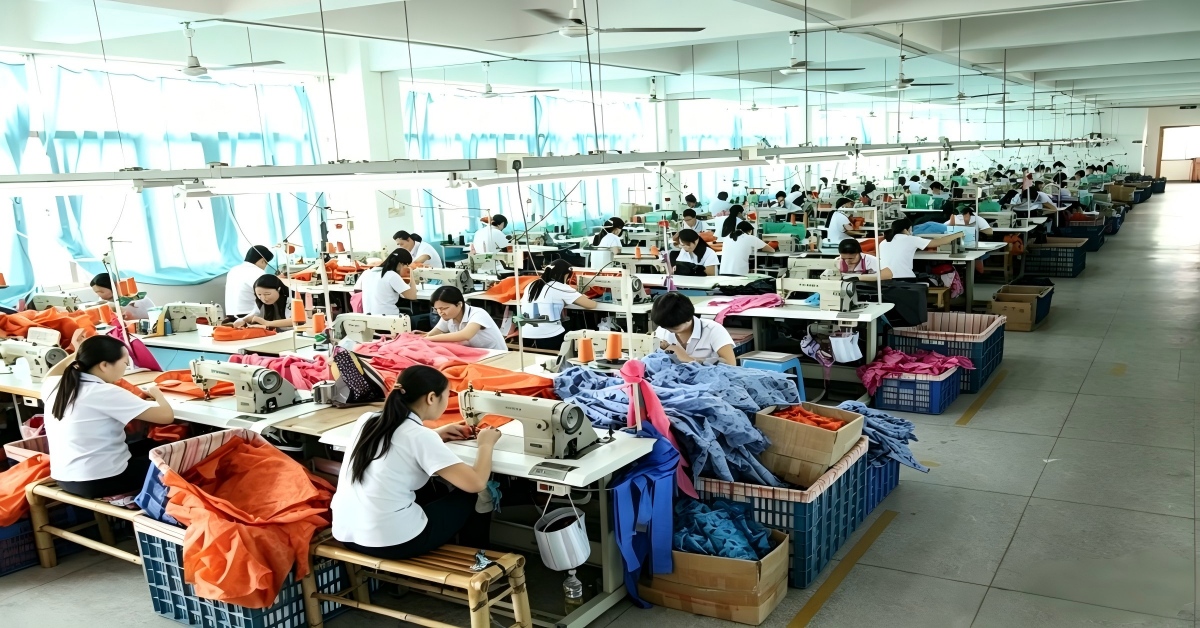
Most buyers never see inside the reusable bag factory making their products. At Weihuang Textile, we believe transparency builds trust. Here is how your order moves from approved design to finished product inside our 4,000-square-meter facility in Xiamen, Fujian.
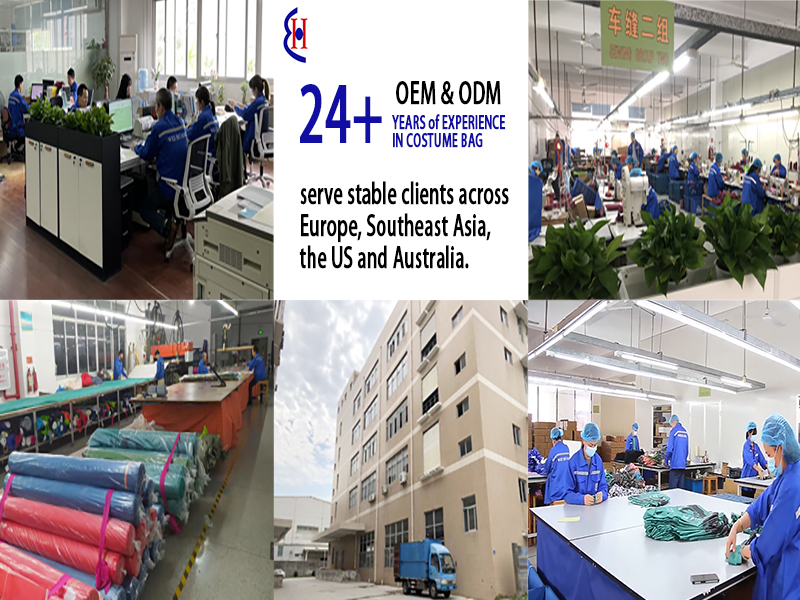
Step 1: Digital Printing at Our Reusable Bag Factory
Every custom order begins here. Once your design is confirmed, our in-house team handles pre-press layout and color separation. We then print directly onto fabric using our own digital sublimation and rotary printing machines.
- In-house capability: Digital sublimation printers and rotary printing machines on-site — no outsourcing delays.
- Resolution: Up to 1,440 DPI for sharp detail and smooth gradients.
- Color matching: Pantone-calibrated workflow ensures consistency from screen to fabric.
- Turnaround: Digital proof ready within 24 hours after design confirmation.
Step 2: Cutting Department
After printing, panels move to cutting. We operate both manual cutting tables for small-batch custom jobs and automated CNC cutting machines for high-volume production.
- Capacity: Up to 50,000 pieces per day for standard shapes.
- Accuracy: Computer-guided cutters reduce fabric waste by approximately 12% compared to manual methods.
- Nesting software: Our system optimizes how pattern pieces are laid out on fabric rolls, squeezing maximum yield from every meter.
Step 3: Printing & Branding
For logo applications, orders flow to either our silk-screen workshop or heat-transfer station depending on artwork complexity and order volume.
- Silk screen: automated carousel presses, each capable of 6-color registration.
- Heat transfer: hydraulic heat presses ranging from 40x50cm to 100x120cm.
- Quality check: Every printed panel is inspected for registration accuracy, color match, and adhesion before leaving the station.
Sewing Floor: Where Experience Matters
Our sewing department employs over 120 skilled operators, many with 10+ years of experience in bag manufacturing.
- Machine count: 200+ industrial sewing machines including lockstitch, overlock, and bar-tack units.
- Specialization: Operators are grouped by product type — foldable bags, drawstring backpacks, cooler bags — so expertise is concentrated.
- Stitch standard: Minimum 7 stitches per inch on all stress points. Bartack reinforcement on handles and corners.
Quality Control: Three Gates
We do not rely on a single final inspection. Every order passes through three checkpoints:
- In-process inspection: Supervisors check random samples from each sewing line every 2 hours.
- Pre-packaging inspection: Finished bags are checked for stitching, dimensions, print placement, and cleanliness.
- AQL sampling: Before shipment, a licensed QC inspector performs random sampling per ISO 2859-1 (AQL 2.5 for major defects, 4.0 for minor).
Packaging & Logistics
- Inner packing: Polybag or kraft paper wrap per customer request.
- Outer cartons: Five-layer corrugated boxes, typically 50–100 units per carton depending on bag size.
- Loading: FCL or LCL shipments via Xiamen Port. Typical transit: 14–16 days to North America West Coast, 18–22 days to Europe, 20–24 days to North America East Coast, 12–14 days to Japan.
Reusable Bag Factory by the Numbers
| Metric | Figure |
|---|---|
| Factory floor space | 4,000+ sqm |
| Total employees | 200+ |
| Annual output | 70+ million bags |
| Export markets | North America, Europe, Australia, Japan, Corée |
| Years in operation | Since 2002 |
| Certifications | Oeko-Tex 100, SGS, ISO, BSCI |
Why Reusable Bag Factory Capacity Matters
Capacity is not just about volume. It is about reliability. A reusable bag factory that can produce 70 million bags per year has the systems, workforce, and equipment to absorb rush orders, maintain consistent quality, and deliver on time — even during peak season.

WeChat
Scannez le QR Code avec WeChat