 เว่ยหวงสิ่งทอ | โรงงานกระเป๋า Eco RPET แบบกำหนดเอง
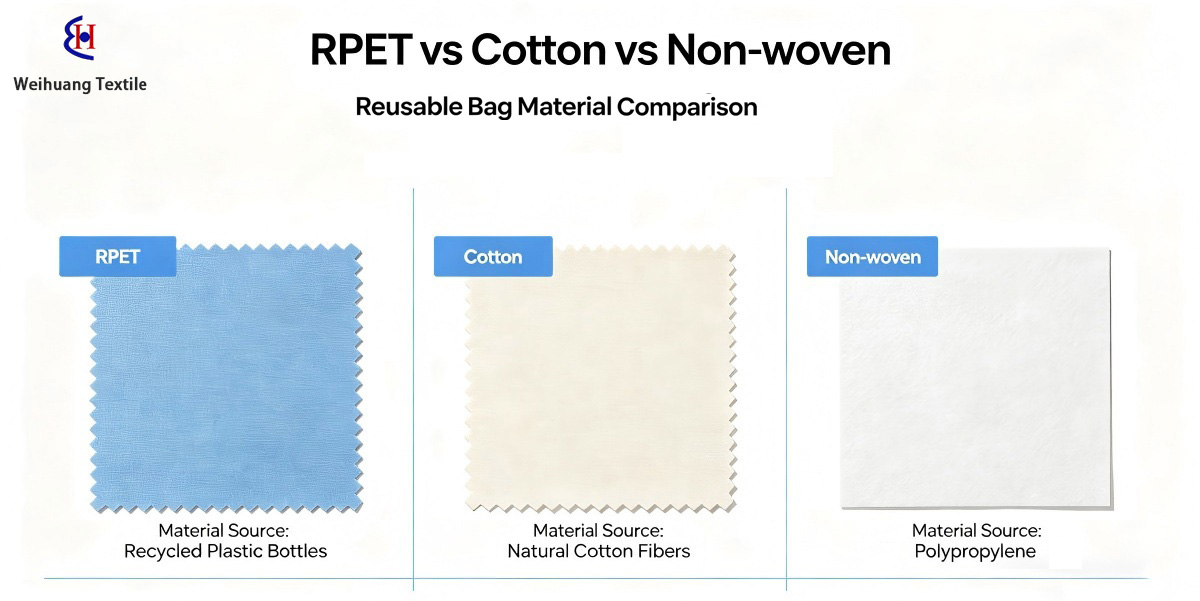
การเลือกสิ่งที่ถูกต้อง RPET bag material can make or break your reusable bag project. When buyers first reach out to our factory, one of the most common questions we hear is: “Which fabric should I choose — RPET, cotton, or non-woven?”
The truth is, there is no single “best” ผ้า. The right material depends on your target market, budget, branding goals, and how the bag will be used. Here is how we break it down for clients at Weihuang Textile.
รปต (โพลีเอสเตอร์รีไซเคิล) — The Sustainable Flagship
ดีที่สุดสำหรับ: Eco-conscious brands, corporate giveaways, retail promotions
RPET is made from recycled plastic bottles — usually 100% post-consumer waste. It has the strength and water resistance of virgin polyester but with a significantly lower carbon footprint. ในฐานะที่เป็น โอเอโกะ-เท็กซ์ 100 ได้รับการรับรอง factory, we see RPET bag material demand growing fastest among European and North American buyers.
- ความทนทาน: ยอดเยี่ยม. RPET holds up to daily use and resists stretching.
- Print quality: Very good. Works well with silk-screen and heat-transfer printing.
- Cost: Mid-to-high. Slightly more expensive than non-woven, but the sustainability story sells.
- Eco appeal: Strong. Buyers increasingly request RPET by name for its recycled origin story.
Our take: If your brand leads with sustainability, RPET bag material is your flagship choice.
Cotton (Canvas / Calico) — Premium Natural Feel
ดีที่สุดสำหรับ: Premium retail, fashion brands, reusable grocery programs
Cotton bags feel natural and upscale. They age well — developing a soft patina over time — and customers tend to keep them longer.
- ความทนทาน: Good for light-to-medium loads. Heavy canvas handles bulkier items.
- Print quality: Excellent for detailed logos. DTG and screen printing both perform well.
- Cost: Higher, especially for organic or GOTS-certified cotton.
- Eco appeal: สูง, but water-intensive cultivation is a consideration.
Our take: Cotton is the choice when perceived value matters more than unit cost.
Non-Woven Polypropylene — Volume & Value
ดีที่สุดสำหรับ: Large-volume giveaways, งานแสดงสินค้า, supermarket chains
Non-woven PP is lightweight, inexpensive, and easy to produce at scale. It is the workhorse of the promotional bag world.
- ความทนทาน: ปานกลาง. Fine for groceries and light shopping, but less resilient long-term.
- Print quality: Acceptable for simple one-color logos.
- Cost: Lowest of the three.
- Eco appeal: นำกลับมาใช้ใหม่ได้, but not biodegradable. Recyclable where facilities exist.
Our take: When you need 50,000 units at the tightest possible price, non-woven delivers.
RPET Bag Material Comparison: At a Glance
| คุณสมบัติ | รปต | Cotton | Non-Woven PP |
|---|---|---|---|
| ความทนทาน | สูง | Medium-High | ปานกลาง |
| Print Quality | สูง | Very High | ปานกลาง |
| Unit Cost | Medium-High | สูง | ต่ำ |
| Eco Story | Strong | Strong | ปานกลาง |
| Best Volume | 1,000–50,000 | 500–10,000 | 5,000–100,000+ |
Which RPET Bag Material Fits Your Brand?
Start with your end customer. A European retail buyer will prioritize material origin and certification. A North American event marketer will prioritize cost-per-impression. We help you match the sustainable textile RPET bag material to the mission.

วีแชท
สแกนรหัส QR ด้วย wechat