 Weihuang Textile | Custom Eco RPET Bag Factory
Promotional Bag Customization: How to Choose the Right Printing Method
You have the logo approved, a target retail price, and a trade show three weeks away. Three factories send quotes that land close on price but say three different things about how your logo will be printed: screen print, heat transfer, embroidery. You pick one, the bulk arrives, and the problem shows up later — a logo that cracks after the first wash, a gradient that prints as visible flat steps, small text that fills in until it is unreadable, or colors that never quite matched the Pantone chip you approved.
For promotional bag buyers, the decoration method is not a footnote on the quote. It is the part of the bag your client’s customers actually look at, touch, and use as a first impression of the brand. This guide walks through the four methods we run in-house at Weihuang Textile for customers across North America and Europe, and how to match the right one to your artwork, quantity, budget, and deadline.
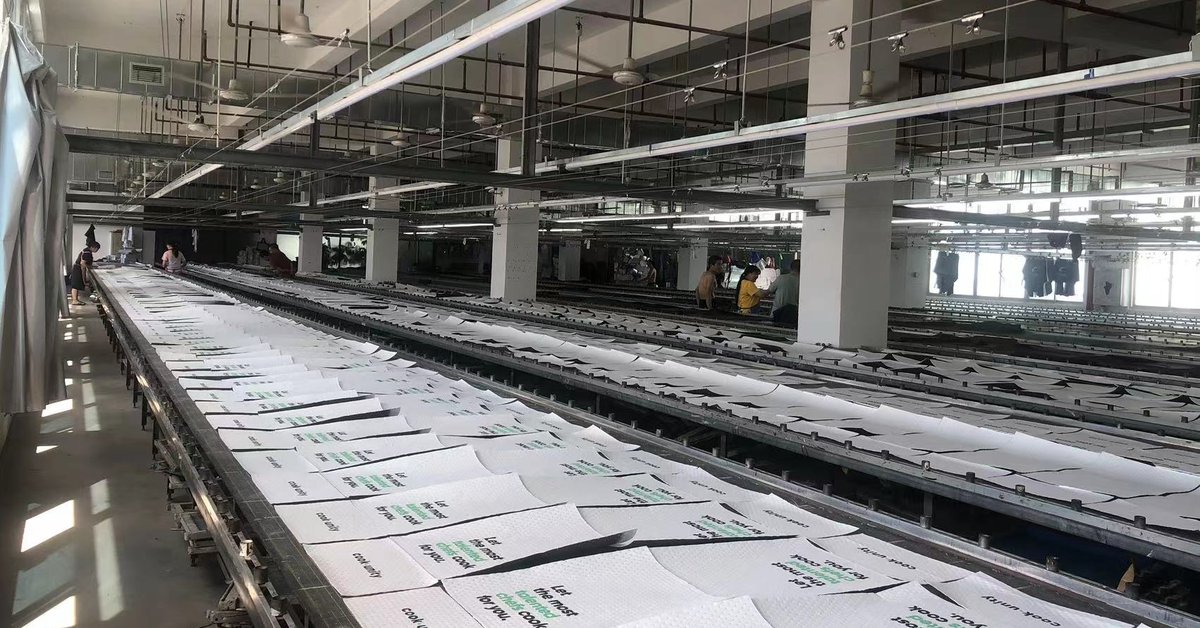
Why the Decoration Method Matters More Than the Bag
A promotional bag spends its life in public — on a shoulder, in a cart, at a desk. The body of the bag sets the price, but the printed area carries the brand. Two bags made from the same RPET canvas can feel like completely different products depending on how the logo was applied.
Decoration drives five things buyers usually underestimate until the order is already in production:
- Durability and wash resistance. A method that is right for a light-use event tote can fail badly on a bag that gets washed weekly.
- Color accuracy. Flat spot colors and blends and gradients each behave differently against your brand Pantone reference.
- Setup cost versus run cost. Some methods charge a one-time setup per color or per logo, which only pays off at volume. Others have almost no setup and win at small quantities.
- Artwork limits. Fine text, thin gradients, and photographic logos are not equally friendly to every technique.
- Lead time. More setup steps mean more calendar days before production, which matters in a seasonal window.
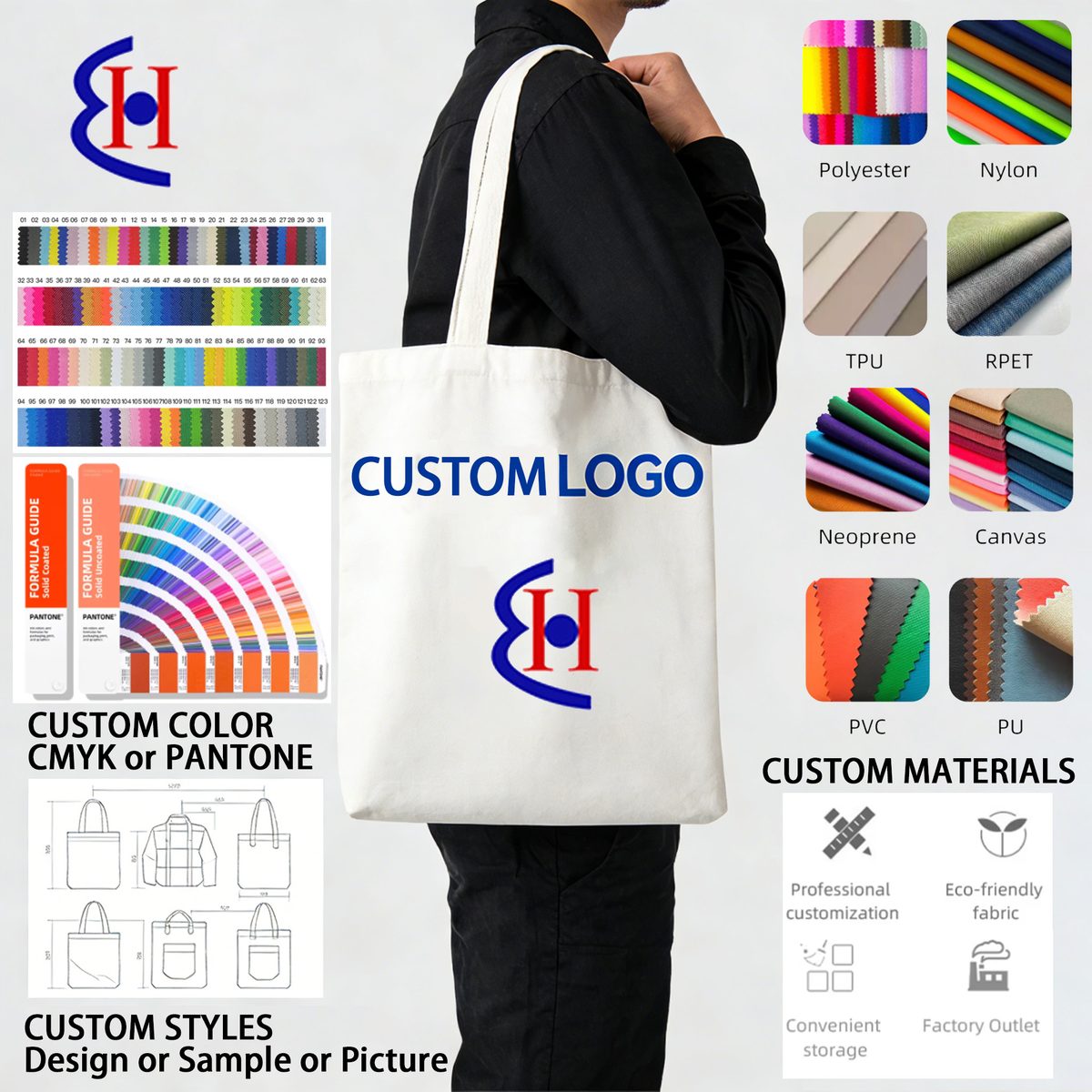
Screen Printing: Best for Bold, Simple Logos at Volume
Screen printing (also called silk screen) pushes ink through a fine mesh stencil onto the fabric, one screen per color. It is the workhorse method for promotional bags because it is simple, fast at scale, and produces a thick, opaque, durable print.
Choose screen printing when your logo is one to four flat spot colors, the artwork is bold with solid fills and clean letterforms, and your order is large enough to spread the per-color setup across the run. It performs well on canvas, RPET woven fabric, nonwoven, and cotton — including darker fabrics, where an underlay print keeps colors vivid.
- Strengths: lowest unit cost at volume, excellent wash and rub durability, strong opacity, great on dark grounds with an underbase.
- Limits: each added color needs its own screen and setup; photographic images, soft gradients, and very fine detail are impractical; registration can drift on tight multi-color artwork.
Heat Transfer and Digital Printing: Best for Full-Color and Photo Artwork
Heat transfer prints the artwork onto a transfer film or paper first, then presses it onto the bag with controlled heat and pressure. It handles full-color, detailed, and photographic logos that screen printing cannot, and it works well on cotton, canvas, and blends. The key variable is cure: correct temperature, pressure, and time decide whether the print survives repeated washing or peels at the edges.
Digital printing (including direct-to-fabric and dye-sublimation) applies the artwork straight from a digital file with no screens and no setup. That makes it the most flexible option for gradients, full-color artwork, photographs, small text, and short or mid-size runs where a screen setup would not pay off. Sublimation fuses the color into polyester and RPET fabric for a soft hand feel and strong wash resistance.
- Strengths: full color in one pass, no or low setup, fast sampling, small runs are viable, easy brand-color reproduction from a digital file.
- Limits: a higher per-unit cost than screen printing once volumes climb; wash durability depends on fabric type and correct curing; some methods add a slight hand-feel change to the printed area.
Embroidery: Best for Premium, Textured Branding
Embroidery stitches the logo in thread, which is why it reads as a premium finish. It is ideal for gift-with-purchase bags, cosmetic and vanity bags, canvas totes, and anything where the branding should feel considered rather than printed on. Because it is thread on fabric, it is very durable and does not rub off the way ink can.
- Strengths: premium texture, excellent abrasion durability, no ink transfer, strong contrast on dark fabrics, a finished look that fits higher price points.
- Limits: higher cost per piece; very small text and fine lines fill in, so artwork often needs to be simplified; gradients are not possible; a one-time digitizing step is required to convert the logo into a stitch file.
Which Printing Method Fits Your Order?
There is no single best method — only the best method for a given artwork, fabric, quantity, and budget. Here is how we advise buyers during sourcing.
| Method | Best for artwork | Works best on | Setup cost | Ideal order size | Wash durability |
|---|---|---|---|---|---|
| Screen printing | 1–4 bold spot colors | Canvas, RPET woven, nonwoven, cotton | Per color / screen | 2,000+ pcs | Excellent |
| Heat transfer | Full-color, detailed logos | Cotton, canvas, blends | Low to medium | 500–5,000 pcs | Good (depends on cure) |
| Digital / sublimation | Gradients, photos, fine text | Polyester and RPET (sublimation); blends | None | Small to mid runs | Good–excellent on polyester |
| Embroidery | Clean words and logos, few colors | Canvas, cotton, twill | Digitizing fee per logo | Flexible (premium) | Excellent |
A quick way to decide:
- One to three flat colors and a large order: screen printing gives the best unit price.
- A full-color or photo logo in a smaller run: digital printing avoids setup you would never recover.
- Multi-color artwork on cotton or canvas: heat transfer balances detail and cost in the mid-volume range.
- A premium or textured look: embroidery, even if the artwork has to be simplified first.
- Two techniques at once: a screen-printed body plus an embroidered wordmark is a common, effective pairing.
Our standard minimum order quantity is 500 pcs per color and per design. For high-visibility programs, we always recommend approving a physical pre-production sample before the bulk run, whatever the method.
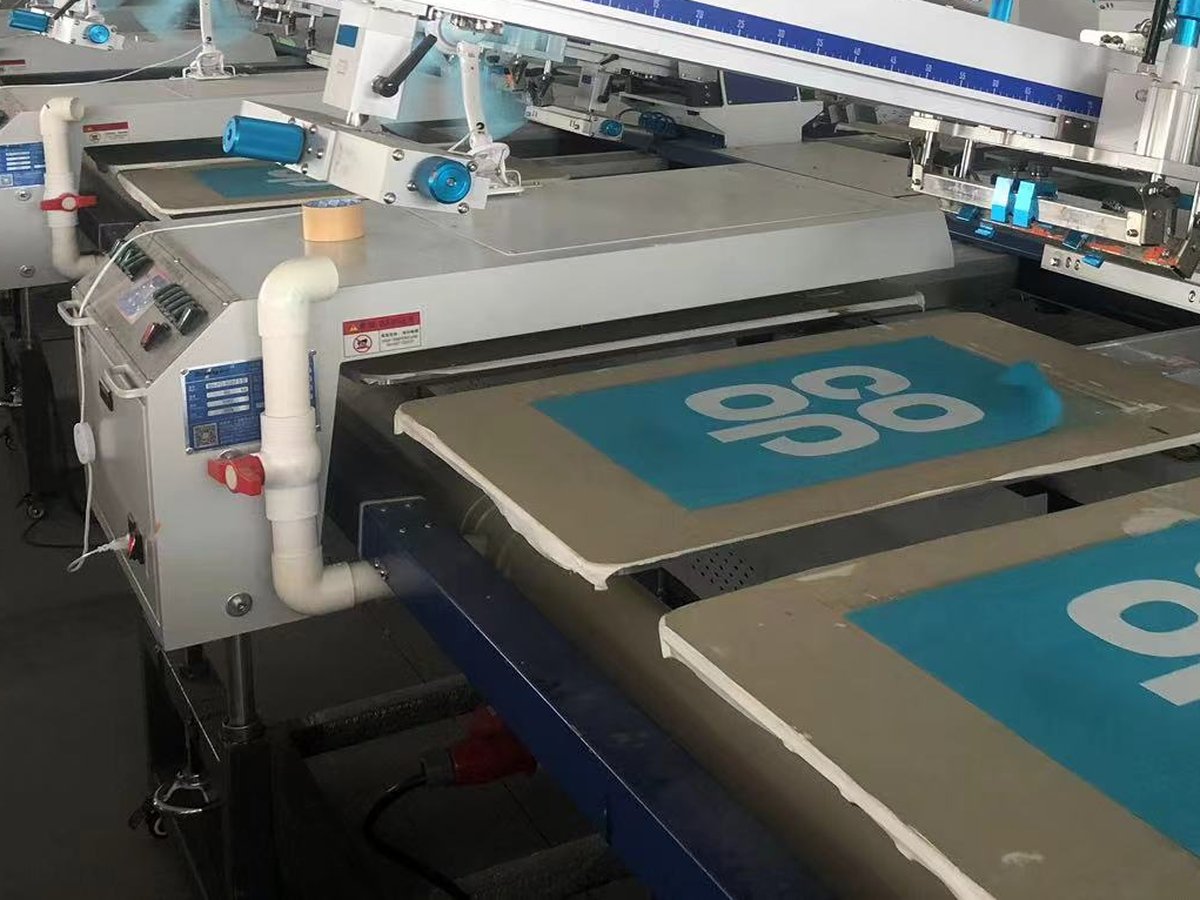
Artwork Prep, Sampling, and Print QC
Print quality starts before production. What you send us in the first email has more effect on the final logo than almost anything else:
- Vector artwork is best: AI, EPS, PDF, or SVG scales cleanly to any bag size. A high-resolution PNG at 300 dpi or above also works. For embroidery, a vector file lets us digitize the logo accurately.
- Give color references: Pantone or PMS numbers (specify coated or uncoated) are far more reliable than “the blue from our website.”
- Confirm size and placement: print width and height, position on the panel, and the distance from seams or handles.
A digital mockup confirms layout; a physical pre-production sample confirms color, position, and hand feel on the real fabric. We ask for final artwork approval before sampling starts, because changes requested after approval mean new screens, new digitizing, or a new print run, which are quoted as a separate cost.
Before cartons ship, we check print against the approved sample: color matched under standard lighting, correct position and size, and an adhesion or rub test where the method calls for it. It is part of the same AQL-based inspection we run on every order, so print faults are caught in the factory rather than by your customer.
Get the Right Print Method for Your Next Bag Program
The right decoration method comes down to three questions: what does your artwork need, how many pieces are you ordering, and what will the bag endure in use? Answer those and the choice is usually obvious — which is why it pays to settle it before you compare quotes, not after.
Weihuang Textile is an RPET and canvas bag OEM/ODM factory in Xiamen, established in 2002, running screen printing, heat transfer, digital printing, and embroidery in-house. Our production is OEKO-TEX Standard 100 certified, and we work with GRS-certified recycled fabrics with transaction certificates available on request.
Ready to see your logo on a bag?
Send us your artwork, bag type, quantity, and destination market. We will recommend the print method that fits your logo and budget, prepare a digital mockup, and quote with a clear production timeline.

WeChat
Scan the QR Code with wechat